Wednesday, December 11, 2013

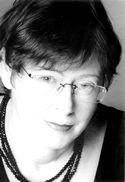
Penelope Fitzgerald

I am well into Hermione Lee's biography of Penelope Fitzgerald and I am riveted. I'll be blogging about it when I have finished it. It is particularly fascinating to read a biography when the subject is someone you've known.I first met Penelope when I was curator at the William Morris Society at Kelmscott House in Hammersmith at the end of the 1980s. When I'd moved on from my job as curator to lecture at Homerton College, I stayed on the committee, and in due course became vice-chair and then chair. It was in that capacity that I spoke on behalf of the Society at Penelope Fitzgerald's memorial service. This is some of what I said.

'Penelope joined in [The William Morris Society] in 1973 and over the years she was a loyal friend of the Society - and of Morris and Burne-Jones. She reviewed books for our Journal, gave lectures, chaired meetings. My own memories of her include standing with her on a bitterly cold day near the site of Burne-Jones's house, the Grange, in Kensington on the day that it was given a blue plaque. In 1982 she edited - most appropriately - Morris's only novel, the unfinished Novel on Blue Paper.

Of course the greatest and most lasting contribution in this area is her biography of Burne-Jones. This marvellous book is frank, yet tactful, non-judgmental, but very shrewd. Above all it is a wonderful read, as compulsively readable as one of her novels. No-one has got closer to the psychological roots of Burne-Jones's art. Penelope combined a scholarly concern for exactitude with a novelist's sensibility to produce what is as much the portrait of a marriage and of a remarkable woman, Georgiana Burne-Jones, as a biography of an artist. I think Penelope felt a special sympathy for Georgiana, who had been her husband's first biographer. The Memorials of Edward Burne-Jones is one of the really great Victorian biographies and Penelope's book was a worthy successor.

When Georgiana Burne-Jones died in 1920, J. W. Mackail, her son-in-law and also Morris's biographer, wrote a tribute. Much of it might equally have been written for Penelope and I want to end by reading a little of it:

"She was a personality of extraordinary distinction and charm. No one, man or woman, who made her acquaintance failed to come under the spell of a nature that radiated beauty. Her intellectual powers were great . . . She had large clear eyes for art, books and human beings. Unaffected and touching humility was combined in her with quiet dignity. Few, if any, were more alive to follies and absurdities . . . her heart did not harden or her eager receptiveness lessen with the years. She burned to end with a clear, steady flame, leaving to those who love her a memory which is a continuing presence."'

Labels: , ,

Monday, September 26, 2011

Closing the Bedroom Door

It occurred to me the other day that you know you've reached a certain age when you write a sex scene and you're no longer worried about what your mother will think. No, now you're worrying about what your children will think.
I'm know I'm not the only writer to find it difficult to write about sex. It's not just the embarrassment factor - though there is that - it's knowing how to get the tone right. Last week I watched GRACIE! on TV. I missed this the first time round. It's the story of the singer Gracie Fields' marriage to the Italian movie director, Monty Banks, and the dilemma she faced when he was threatened with internment in the Second World War. The extraordinary Jane Horrocks pulls off such a tour-de-force as Gracie that when I heard Gracie herself on YouTube I found her curiously unconvincing. Tom Hollander was magnificent as Monty Banks and there was real chemistry between them. When he tells her he's in love with her and they kiss, they are at the door of his hotel room. He kisses her hand and draws her in. The door closes in the viewer's face. In the next scene they are having breakfast in the dining room. Yes, it's a cliché, but it works. It set me thinking about the way less sometimes really is more. In sex scenes - as in ghost stories and horror movies too - it's usually best to leave quite a bit to the imagination. For my money one of the most erotic sentences in modern fiction comes in Penelope Fitzgerald's wonderful novel, THE BEGINNING OF SPRING. It's set in Russia in the 1910s. Frank has been deserted by his wife and has fallen in love with Lisa, who's been employed to look after his children. When he declares himself they are interrupted and she slips away. Later he goes to look for her. 'Frank went up the dark stairs to the back of the house and knocked at the door of Lisa's room. He had not expected it to be locked, and it was not locked, but he waited until he heard her bare feet cross the wooden floor to open it.' There's a space and the next section begins 'In the very early morning, they left for Shirokaya.' That's all, but in the context of the novel it's electrifying.
What did Shelley write? 'Heard melodies are sweet, those unheard are sweeter.' I rather think he was right, and will you excuse me now while I go and look for my smelling salts . . .

Labels: , , , ,

Monday, March 09, 2009

So I Have Thought of You

This is a collection of Penelope Fitzgerald's letters and I was particularly anxious to read them, because I knew her. In fact I actually have a letter from her myself, tucked inside my copy of her marvellous biography of the Knox brothers. I'd written to tell her much I had enjoyed that and her novels and her biography of Burne-Jones. That last accounts for where our lives intersected. I met her when I was curator at the William Morris Society.
But I have to admit that when I skimmed through this book, I began to wonder if it should have published. She certainly didn't write with a eye to publication and was a reticent and private person. I certainly wouldn't want my own letters published - not that it is ever likely to happen, thank God. And then, too, where I dipped in, some of the letters to publishers seemed a little too mundane to have been worth printing. Certainly she is not one of the great letter- writers, no Keats or Byron, but once I got into their rhythm, I began to appreciate this chronicle of small pleasures (in which the discarding of a flannel is regarded as 'reckless') and not so small sorrows. Even the letters to publishers contain some gems. I loved this: 'Still doggedly going on with the Independent Foreign Fiction awards, only to find that one of the books we've got on the short list has been pulped by Macmillan's already - the whole book business is getting very depressing.' Yes, indeed. This was 1995 and things haven't changed.
In the 1970s she complains about old and tired she is, virtually on her last legs - she had two teaching jobs, so no wonder - when actually she had well over twenty years to go and all her great success and acclaim was ahead of her. For one of the marvellous things about Penelope, in the eyes of a middle-aged writer like myself, is that she didn't even published her first novel until she was sixty.

Labels: ,